What Is Failed Back Surgery Syndrome?
Failed back surgery syndrome (FBSS) occurs when a patient continues to have back or leg pain after spine surgery, or develops new pain after a period of relief. Despite the name, it does not always mean the original surgery was performed poorly. It describes an outcome: the procedure did not deliver the relief you and your surgeon expected.
Some physicians also refer to this condition as post-laminectomy syndrome or persistent spinal pain syndrome. Whatever the label, the experience is often the same. You went through surgery, recovery, and rehabilitation hoping to get your life back, and the pain is still there.
The good news is that failed back surgery syndrome can be evaluated and treated. At Spine Solutions in Hollywood, Boca Raton, and Coral Gables, our goal is to identify exactly why your pain persists so we can recommend the right treatment and deliver the back pain relief you deserve.
What Causes Failed Back Surgery Syndrome?

Pain after back surgery rarely has a single explanation. A careful evaluation often reveals one or more of the following factors:
- Recurrent disc herniation: Disc material can herniate again at the same level after a discectomy, placing new pressure on a nerve.
- Adjacent segment disease: After a spinal fusion, the levels above or below the fused segment may absorb extra stress and begin to degenerate.
- Pseudarthrosis: A fusion that does not heal solidly can leave the spine unstable and painful.
- Epidural fibrosis: Scar tissue that forms around nerve roots during healing can contribute to ongoing nerve pain.
- Incomplete or recurrent decompression: If a nerve was not fully freed during surgery, or if spinal stenosis develops again, symptoms can return.
- Hardware complications: Screws, rods, or other implants can loosen, shift, or irritate surrounding tissue.
- An incomplete original diagnosis: Sometimes the first surgery treated a problem that was not the primary source of pain.
Other factors, such as smoking, diabetes, and the physical demands of daily life, can also affect how well the spine heals. Understanding which of these applies to you can help our team customize a treatment plan for your specific set of symptoms.
Symptoms of Failed Back Surgery Syndrome
Failed back surgery syndrome looks different from one patient to the next, but common signs typically include:
- Back pain that never improved after surgery, or returned weeks or months later
- Radiating pain, numbness, or tingling in the buttocks, legs, or feet, similar to sciatica
- Sharp, burning, or aching pain that feels different from your original symptoms
- Stiffness and reduced mobility in the lower back
- Pain that worsens with prolonged sitting, standing, or walking
- Difficulty sleeping, working, or keeping up with daily activities
Living with ongoing pain can also take a toll on your mood, relationships, and overall quality of life. If you experience sudden leg weakness, loss of bladder or bowel control, or numbness in the groin area, seek medical care right away.
Failed Back Surgery Syndrome Treatments
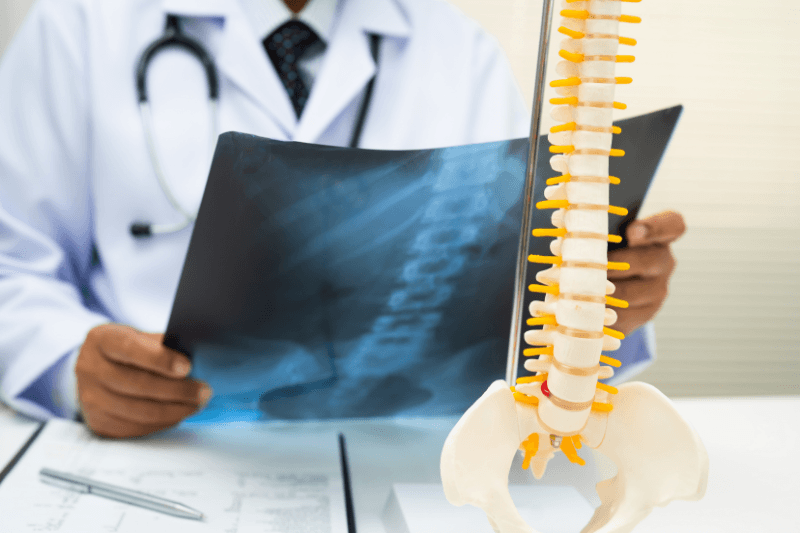
Effective treatment starts with answers. Dr. Myers takes the time to review your surgical history, examine you in person, and order advanced imaging such as MRI, CT, or X-rays to understand what is happening in your spine today. Bringing your prior imaging and operative reports to your visit helps complete the picture.
Non-Surgical Care for Failed Back Syndrome
For many patients, a conservative plan is the right place to begin. Depending on your diagnosis, this may include physical therapy focused on core strength and flexibility, anti-inflammatory or nerve pain medications, activity modification, and targeted injections that calm irritated nerves. We will not recommend another operation unless it offers a clear opportunity for improving your pain.
Minimally Invasive Surgery for FBSS
When imaging reveals a correctable structural problem, revision spine surgery may be the best option. Revision procedures are more complex than first-time surgeries because they involve scar tissue and altered anatomy, which is why your surgeon’s experience matters. Depending on the cause of your pain, Dr. Myers may recommend a revision discectomy, additional decompression through laminectomy, repair of a fusion that did not heal, extension of a fusion to an adjacent level, or removal and replacement of problematic hardware. Whenever appropriate, he uses minimally invasive spine surgery techniques designed to limit disruption to healthy tissue and support a smoother recovery.
Find Relief from Failed Back Surgery Syndrome in South Florida
You deserve a clear explanation for your pain and a plan that gives you a real chance at relief. Led by Dr. Behnam Myers, a board-certified orthopedic spine surgeon with 20 years of experience and more than 8,000 successful spinal outcomes, Spine Solutions welcomes patients from across Miami and South Florida at our offices in Hollywood, Boca Raton, and Coral Gables. We accept all major PPO insurance plans.
Request an appointment online today and get your life back from failed back surgery syndrome at Spine Solutions.
Frequently Asked Questions About Failed Back Surgery Syndrome in Miami, FL
Does failed back surgery syndrome mean my surgeon made a mistake?
Not necessarily. Many cases develop because of factors outside a surgeon’s control, such as new degeneration, scar tissue, or the way an individual body heals. An examination and evaluation in one of our South Florida pain clinics focuses on finding the cause of your pain so can focus on healing.
Can I see Dr. Myers if he did not perform my first surgery?
Yes. Many patients come to Spine Solutions for a second opinion after surgery elsewhere. Please bring any prior imaging and surgical records you have, as they help us understand your history.
Will I need another back surgery?
Not always. Many patients improve with non-surgical care. Surgery is recommended only when a specific, correctable problem is identified and conservative treatment is unlikely to provide lasting relief.
How long should I wait before getting help for pain after surgery?
Some discomfort is normal during recovery. Pain that lasts beyond your expected healing period, worsens over time, or returns after initial improvement deserves a professional evaluation. If you are unsure, it is worth scheduling a visit.
Does insurance cover treatment for failed back surgery syndrome?
Spine Solutions accepts all major PPO insurance plans. Our team can help you understand your coverage before your appointment.